
Blog
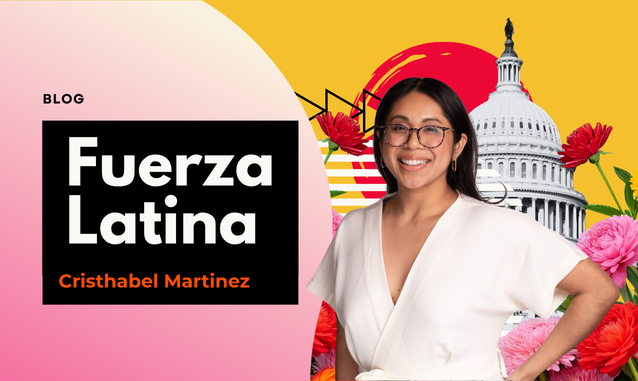
Fuerza Latina: Cristhabel Martinez
As part of our Fuerza Latina series, Latinas Represent is proud to showcase the powerful stories of Latinas who are making a difference in public service. These stories highlight the impactful work being done at all levels of public service by Latina leaders across the country. We believe storytelling is essential to inspiring action and fostering change. Each month, we’ll share a new story to amplify the voices of those shaping the future of our communities. It’s time to tell our stories and make our presence known.

Cristhabel Martinez
Co-Founder & Executive Director of Dreamers of Wisconsin, Latino Organizing Director, Senior Manager of Civic Engagement, Chair of the Latino Caucus for the Democratic Party of Wisconsin
Cristhabel Martinez is an alumna of the University of Wisconsin–Madison, where she earned a Bachelor of Social Work and a Master of Social Work with a concentration in Policy and Administration. She oversees the Civics Department at Leaders Igniting Transformation, a Black and Brown-led organization focused on year-round issue-based and electoral organizing, civic engagement, and leadership development and public policy. Cristhabel also serves as Chair of the Latino Caucus for the Democratic Party of Wisconsin.
Previously, Cristhabel served as Latino Community Organizing Director and Latino Coalition Manager for the Democratic Party of Wisconsin. She is a founding member and former Executive Director of Dreamers of Wisconsin, a nonprofit dedicated to advancing educational equity and supporting undocumented students pursuing higher education. In 2021, she was recognized by Sí Se Puede as one of the “36 Most Influential Latino Leaders in Wisconsin” for this work.
Outside of public service, Cristhabel is a personal trainer who enjoys boxing, spending time outdoors, and caring for her dog, Apollo, and cat, Sapphire.
What inspired you to pursue a career in public service, and what has been the most rewarding part of your journey so far?
As the eldest daughter of a mixed-status family, I witnessed how public policy shaped my family’s access to healthcare, housing, transportation, education, and economic opportunity. Those experiences sparked a lifelong commitment to advancing systemic, institutional, and policy change that creates more equitable outcomes for historically marginalized communities.
One of the most rewarding parts of my journey was founding Dreamers of Wisconsin, a nonprofit dedicated to advancing educational equity and providing holistic support services for undocumented and DACAmented students pursuing higher education. In Wisconsin, undocumented students are ineligible for in-state tuition and state financial aid, creating significant barriers to college access.
To address these inequities, I helped lead our policy advocacy efforts by co-authoring a Tuition Equity Policy Brief, outlining the economic and social benefits of expanding in-state tuition and providing recommendations for state leaders. The brief became an advocacy resource used by the ACLU of Wisconsin, the Higher Ed Immigration Portal, and the Presidents’ Alliance on Higher Education and Immigration. I also organized students, community members, organizations, faculty, and staff to successfully pass a UW–Madison student government resolution calling for in-state tuition, helping future student leaders build momentum for advocacy with the University of Wisconsin System, Board of Regents, and Wisconsin State Legislature.
While pursuing long-term policy change, we also secured funding for holistic support, including Dreamers RISE, a pre-college program, academic mentorship, professional development, and more than $50,000 in scholarships.
This experience shaped how I approach public service today. I learned that lasting policy change requires more than identifying the right solution; it requires building coalitions, engaging stakeholders, centering the voices of those most impacted, and creating the public and institutional support necessary to move an issue forward. It also means addressing immediate community needs while pursuing long-term systemic change. For me, effective leadership is about translating community experiences into actionable policy solutions, bringing people together around a shared vision, and building the relationships and infrastructure necessary to sustain progress beyond any one campaign, organization, or leader.
Where does your fuerza (strength) come from? As a Latina, are there specific cultural values, family influences, or personal experiences that have shaped your leadership approach?
My fuerza comes from my family, my community, and the values that shaped me growing up as a Latina. Much of my leadership approach reflects what I learned from both of my parents and from the way our family navigated life together.
From my mom, I learned the strength of matriarchal leadership. She was organized, determined, and had an incredible ability to create stability and keep our family moving forward, even during challenging circumstances. She taught me the importance of caring for the people around you while taking responsibility when others depend on you. From my dad, I learned the value of hard work, perseverance, and consistency. Together, they taught me to approach challenges with resilience, remain grounded in my responsibilities, and follow through on my commitments.
My culture taught me something equally important: leadership is rooted in community. Growing up, family and community were central to how we celebrated, supported one another, navigated challenges, and created a sense of belonging. Those experiences shaped my belief that leadership is not only about providing direction; it is also about building relationships, listening with intention, recognizing the strengths others bring, and creating opportunities for people to grow into their own leadership.
I carry those values into every space I lead. I want people to understand the larger vision, recognize the importance of their contribution, and see themselves reflected in what we are building together. My fuerza is grounded in the belief that meaningful leadership is collective. We move further when we create space for others and bring people with us.
What advice would you give to another Latina who is considering a career in public service?
My advice to Latinas considering a career in public service is to approach your professional development with intention. Identify the issues, communities, or areas of public service that you are passionate about, and invest in developing the knowledge and skills necessary to become effective in those spaces. Seek out training, fellowships, conferences, and mentorship opportunities that will strengthen your expertise and expose you to different approaches to leadership and public service.
Equally important is investing in relationships. Build a network across organizations, sectors, and levels of leadership, and approach networking as relationship-building rather than simply career advancement. Some of the most valuable professional relationships are those where you can exchange knowledge, seek guidance, collaborate, and create opportunities for one another over time.
I would also encourage Latinas not to undervalue what they bring to the table. Your lived experience can provide an important perspective, but your value also comes from the expertise you develop, the relationships you build, the results you deliver, and the judgment you gain throughout your career. Imposter syndrome may surface as you enter new spaces or take on greater responsibility, but it should not determine how you assess your own readiness or potential.
Finally, become comfortable advocating for yourself. Understand your value in the market, negotiate your compensation, pursue opportunities for advancement, and be intentional about the trajectory of your career. We often enter public service because we believe deeply in advocating for others; learning to advocate for ourselves is also an important part of becoming effective and sustainable leaders.
How do you stay connected to the communities you serve, and what advice would you give to others about fostering meaningful connections?
How do you stay connected to the communities you serve, and what advice would you give to others about fostering meaningful connections?
What is your vision for the future of Latina leadership in public service?
My vision for the future of Latina leadership in public service is one where more Latinas across generations see themselves not only participating in public institutions, but leading them and shaping the decisions that affect our communities.
I hope we continue creating pathways for emerging leaders while recognizing the knowledge and contributions of those who have been doing this work for generations. Our lived experiences matter, but so do the professional expertise, institutional knowledge, and leadership skills Latinas bring to public service. We should be creating spaces where all of those experiences are valued and where Latinas have access to the mentorship, professional development, relationships, and opportunities necessary to advance into positions of greater influence and decision-making.
I also want Latina leaders to have the confidence and tenacity to enter spaces where we have historically been underrepresented and know that we belong there. Representation matters, but our leadership should extend beyond representation alone. We have an opportunity to use our perspectives and expertise to strengthen institutions, shape more responsive public policy, and improve how government and organizations serve people.
Ultimately, my vision is for Latina leadership to become increasingly visible, influential, and intergenerational, with each generation creating greater opportunities for the next. When Latinas are empowered to lead, our impact is not limited to Latino communities; we can help build stronger, more equitable, and more responsive institutions for everyone we serve.
Rapid Fire Questions
Favorite meal that reminds you of home?
Cochinita Pebil
What’s one Spanish dicho (saying) you live by?
No te hagas bolas
What is your power color or accessory?
Red
DISCLAIMER: Our blog posts are intended for educational purposes. They do not equal an endorsement of any elected official, party affiliation, or political views. Latinas Represent and our fiscal sponsor, Moore Impact, do not endorse candidates for public office.